Ebook The Rational Optimist: How Prosperity Evolves (P.S.), by Matt Ridley
Reviewing guide The Rational Optimist: How Prosperity Evolves (P.S.), By Matt Ridley by on-line can be likewise done conveniently every where you are. It seems that waiting the bus on the shelter, hesitating the list for queue, or other locations feasible. This The Rational Optimist: How Prosperity Evolves (P.S.), By Matt Ridley can accompany you in that time. It will not make you really feel bored. Besides, this way will also enhance your life top quality.
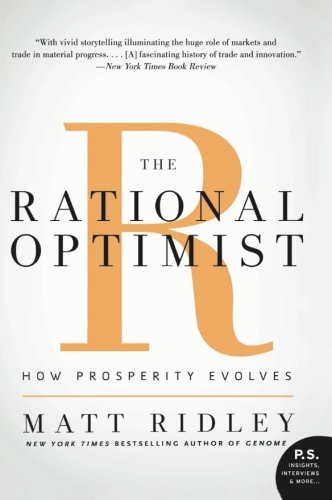
The Rational Optimist: How Prosperity Evolves (P.S.), by Matt Ridley

Ebook The Rational Optimist: How Prosperity Evolves (P.S.), by Matt Ridley
Simply for you today! Discover your preferred publication right below by downloading as well as obtaining the soft file of guide The Rational Optimist: How Prosperity Evolves (P.S.), By Matt Ridley This is not your time to typically visit the book stores to acquire an e-book. Right here, selections of book The Rational Optimist: How Prosperity Evolves (P.S.), By Matt Ridley as well as collections are offered to download. Among them is this The Rational Optimist: How Prosperity Evolves (P.S.), By Matt Ridley as your favored book. Obtaining this book The Rational Optimist: How Prosperity Evolves (P.S.), By Matt Ridley by online in this site could be recognized now by seeing the web link page to download. It will be simple. Why should be here?
Why must be The Rational Optimist: How Prosperity Evolves (P.S.), By Matt Ridley in this website? Get much more revenues as just what we have actually told you. You could locate the various other eases besides the previous one. Relieve of obtaining guide The Rational Optimist: How Prosperity Evolves (P.S.), By Matt Ridley as what you want is also offered. Why? Our company offer you numerous kinds of the books that will certainly not make you feel weary. You could download them in the link that we offer. By downloading and install The Rational Optimist: How Prosperity Evolves (P.S.), By Matt Ridley, you have taken properly to pick the simplicity one, compared with the problem one.
The The Rational Optimist: How Prosperity Evolves (P.S.), By Matt Ridley tends to be excellent reading book that is easy to understand. This is why this book The Rational Optimist: How Prosperity Evolves (P.S.), By Matt Ridley becomes a preferred book to read. Why don't you really want turned into one of them? You could take pleasure in reading The Rational Optimist: How Prosperity Evolves (P.S.), By Matt Ridley while doing other activities. The existence of the soft data of this book The Rational Optimist: How Prosperity Evolves (P.S.), By Matt Ridley is kind of obtaining experience conveniently. It consists of how you must save the book The Rational Optimist: How Prosperity Evolves (P.S.), By Matt Ridley, not in racks obviously. You might wait in your computer tool and also gadget.
By saving The Rational Optimist: How Prosperity Evolves (P.S.), By Matt Ridley in the device, the method you check out will certainly likewise be much less complex. Open it and also start checking out The Rational Optimist: How Prosperity Evolves (P.S.), By Matt Ridley, straightforward. This is reason why we recommend this The Rational Optimist: How Prosperity Evolves (P.S.), By Matt Ridley in soft file. It will not disturb your time to get guide. Additionally, the on-line system will additionally reduce you to search The Rational Optimist: How Prosperity Evolves (P.S.), By Matt Ridley it, even without going somewhere. If you have connection net in your office, residence, or gizmo, you could download The Rational Optimist: How Prosperity Evolves (P.S.), By Matt Ridley it straight. You may not additionally wait to obtain the book The Rational Optimist: How Prosperity Evolves (P.S.), By Matt Ridley to send out by the seller in other days.
“Ridley writes with panache, wit, and humor and displays remarkable ingenuity in finding ways to present complicated materials for the lay reader.” — Los Angeles Times
In a bold and provocative interpretation of economic history, Matt Ridley, the New York Times-bestselling author of Genome and The Red Queen, makes the case for an economics of hope, arguing that the benefits of commerce, technology, innovation, and change—what Ridley calls cultural evolution—will inevitably increase human prosperity. Fans of the works of Jared Diamond (Guns, Germs, and Steel), Niall Ferguson (The Ascent of Money), and Thomas Friedman (The World Is Flat) will find much to ponder and enjoy in The Rational Optimist.
- Sales Rank: #16737 in Books
- Published on: 2011-06-07
- Released on: 2011-06-07
- Original language: English
- Number of items: 1
- Dimensions: 8.00" h x 1.08" w x 5.31" l, .78 pounds
- Binding: Paperback
- 480 pages
From Publishers Weekly
Ideas have sex, in Ridley's schema; they follow a process of natural selection of their own, and as long as they continue to do so, there is reason to retire apocalyptic pessimism about the future of our species. Erstwhile zoologist, conservationist, and journalist, Ridley (The Red Queen) posits that as long as civilization engages in exchange and specialization, we will be able to reinvent ourselves and responsibly use earthly resources ad infinitum. Humanity's collective intelligence will save the day, just as it has over the centuries. Ridley puts current perceptions about violence, wealth, and the environment into historical perspective, reaching back thousands of years to advocate global free trade, smaller government, and the use of fossil fuels. He confidently takes on the experts, from modern sociologists who fret over the current level of violence in the world to environmentalists who disdain genetically modified crops. An ambitious and sunny paean to human ingenuity, this is an argument for why ambitious optimism is morally mandatory. (June)
Copyright � Reed Business Information, a division of Reed Elsevier Inc. All rights reserved.
From Booklist
Science journalist Ridley believes there is a reason to be optimistic about the human race, and he defies the unprecedented economic pessimism he observes. His book is about the rapid and continuous change that human society experiences, unlike any other animal group. Ideas needed to meet and mate for culture to turn cumulative, and “there was a point in human pre-history when big-brained, cultural, learning people for the first time began to exchange things with each other and that once they started doing so, culture suddenly became cumulative, and the great headlong experiment of human economic ‘progress’ began.” Participants in the exchanges improved their lives by trading food and tools. Ridley believes it is probable that humanity will be better off in the next century than it is today, and so will the ecology of our planet. He dares the human race to embrace change, be rationally optimistic, and strive for an improved life for all people. --Mary Whaley
Review
“A superb book…Elegant, learned, and cogent…a far-reaching synthesis of economics and ecology, a triumphant new demarche in the understanding of wealth and poverty…Inspiring.” (George Gilder, National Review)
“A very good book…a rich analysis…Ridley is a cogent and erudite social critic…He bolsters his argument with an impressive tour of evolutionary biology, economics, philosophy, world history.” (Washington Post)
“A fast-moving, intelligent description of why human life has so consistently improved over the course of history, and a wonderful overview of how human civilizations move forward.” (John Tierney, New York Times)
“A delightful and fascinating book filled with insight and wit, which will make you think twice and cheer up.” (Steven Pinker)
“The Rational Optimist teems with challenging and original ideas…No other book has argued with such brilliance and historical breadth against the automatic pessimism that prevails in intellectual life.” (Ian McEwan)
“Ridley eloquently weaves together economics, archeology, history, and evolutionary theory…His words effortlessly turn complicated economic and scientific concepts into entertaining, digestible nuggets.” (Barrett Sheridan, Newsweek)
“Invigorating…For Mr. Ridley, the market for ideas needs to be as open as possible in order to breed ingenuity from collaboration.” (Trevor Butterworth, Wall Street Journal)
“The Rational Optimist will give a reader solid reasons for believing that the human species will overcome its economic, political and environmental woes during this century.” (Fort Worth Star-Telegram)
“This inspiring book, a glorious defense of our species…is a devastating rebuke to humanity’s self-haters.” (Sunday Times (London))
“Original, clever and …controversial” (The Guardian)
“A dose of just the kind of glass-half-full information we need right now…A powerful antidote to gloom-n-doom-mongering.” (Washington Examiner)
“A mesmerizing book.” (Los Angeles Times)
“Ridley’s dazzling, insightful and entertaining book on the unstoppable march of innovation is a refresher course in human history...Great ideas spring up unexpectedly from every direction, with each new one naturally coordinating with others...” (New York Post)
A fabulous new book... I was so delighted, amused and uplifted by it that I bought a couple hundred copies and sent one to all my clients. (Donald Luskin, Smart Money)
Most helpful customer reviews
306 of 319 people found the following review helpful.
A History of Progress
By Kevin Currie-Knight
Matt Ridley's The Rational Optimist is a history of progress based on a simple but unpopular idea: that specialization and markets are the prime movers of progress. In fact, Ridley suggests in his introduction that the answer to the perennial "What makes humans unique?" question is our unique ability to specialize and trade. Instead of catching our own food, making our own shelter, etc (as other animals do), we humans have created a system where everyone can specialize and trade with others who specialize in other things. This means that those best at making houses make houses, those best at making food make food, and by trading, we can each benefit from that which others do and vice versa. Self-reliance equals subsistence: interdependence through trade equals ingenuity and a boom in living standards.
"What?!" you say. What about Rousseau, Marx, Ehrlich, Marcuse, and all of those other critics of society! What about all the stuff we hear about how capitalism exploits the poor, reduces living standards, rapes the environment, etc, etc. The first few chapters of Ridley's book are devoted to showing that, on all fronts, markets have actually produced higher living standards FOR ALL (and especially the poor, as also shown in Sowell's Economic Facts and Fallacies), MORE leisure time for all, and - here's the most surprising - better environmental conditions.
The next several chapters are a history of how this progress happened. To be honest, these chapters may be the most dry as they are very detail-laden and repetitive in that they stress the same theme across time - that specialization leads to ingenuity and progress. In the vein of Robert Wright's Nonzero: The Logic of Human Destiny, Ridley demonstrates - and explains the principle behind - this equation. In brief, when humans invented the idea of specialization and trade, I could make x and you could make y, things we each excel at. Each of us, then, can trade what we excel at for what others excel at rather than having to do all of it ourselves. Finally, when I realize that I can trade my x's for your y's and her z's, it pushes me to be as productive at making my x's as possible (and innovating new ways to make better and faster x's) so that I can make the most of my time. Thus, we stumble upon a brilliant non-zero sum way to ensure that we all benefit from each other's ingenuity, creativity, and labor. Most of these chapters (starting in the stone-age and ending in the present) stress the idea that as transportation allowed us to trade with increasingly larger groups, and as technology allowed us to create more efficiently, the "collective brain" became bigger and everyone could benefit from everyone else's progress.
The last three chapters may be the most controversial as they deal with current naysayers - particularly environmentalists. To be clear, RIDLEY IS NOT ADVOCATING THAT WE CONTINUE CURRENT ENVIRONMENTAL PRACTICES (I bold that because inevitably, some folks will accuse him of an environmental Pollyanna-ism.) Yes, depending on non-renewable fuel, by definition, means that at some point, the fuel will run out. Ridley only points out that naysayers rely on a hidden but faulty premise: that the future will resemble the past. Yes, we will run out of fossil fuels if we keep using it, but whose to say that we will keep using them? Just like Ehrlich's remarkably failed prediction that over-population will lead to food shortages, these folks' error lies in assuming that future ways of production will resemble past ways, and time and time and time again, this assumption has proved erroneous! Ridley's point is that while we can NEVER say that the future WILL solve all pressing problems, so far we have. And we can assume we will in the future because our method of exchange has globalized the "collective brain," assuring that innovation will keep occurring and the best minds will all be working on the pressing problems of the day. (Again, Ridley is not attempting Pollyanna-ism here, but only suggesting that the burden of proof should now lie on the naysayers because the past gives us every reason to think that we will, rather than will not, solve the problems that confront us.)
Now, for two minor criticisms of the book. First, I do question whether Ridley has the knowledge base to go into as much history as he does. When looking through the large endnote section, many of his citations are from non-peer-reviewed trade books, magazines, etc. I simply have a feeling that Ridley's book may not be as academically rigorous as some might want.
I also question Ridley's omission of the crucial function language plays in his theory, for he doesn't spend much time on it. When he asks, as he does repeatedly, what it is about humans over other animals that have been able to create trade networks and specialization, it seems that ONE of the obvious answers is "language." We have the ability to create language that is not only self-expressive but also can be used to inform others of our intent, etc. It seems difficult to create a trade network without the kind of language that can let others know your intent, establish trust, etc. If this is correct, Ridley's shouldn't omit the topic. If it is wrong, he might have explained why.
Be that as it may, this is still a great read. In a world where pessimism simply sells (and makes one sound intellectual) more than optimism, books like these need to be written... and read.
245 of 277 people found the following review helpful.
Will our future be 2,000 more years of imminent apocalypse?
By Steve Summers
First, the GOOD NEWS: the sky isn't falling! The world is actually improving dramatically and the pace is quickening. There are abundant facts to prove it. The BAD NEWS predicted isn't true after all. The not-so-good news is that good news doesn't sell newspapers or prime-time ads. So we'll keep on hearing that doomsday drumbeat of horrific predictions from the media, all of it certified by officials of academia and government with an obvious agenda in the vision of impending environmental collapse which can only be averted by comparably drastic intervention. We have a glut of popular books and articles feeding these fears with plausible evidence for the demise of civilization or the planet, but a critical shortage of books like "The Rational Optimist" which challenge that evidence, describe its pathologies, and show where those disastrously coercive interventions will lead, and what they'll cost in human terms. So why risk ostracism in cocktail-party conversation by reading a persuasive contrarian essay which proclaims a heretical optimism in its title?
Well, one reason might be the pleasures of an utterly readable book. Unlike talk-show polemicists, Matt Ridley uses good-natured eloquence, serious erudition and incisive wit to deflate the imminent-disaster scenarios which dominate our evening news, academic and political discourse. Despite its length, the book is remarkable for its brevity and the sheer quotability of its prose. (A reader cribbing zinger quotes will soon have writer's cramp.)
Another reason might be the challenge of unfamiliar ideas, of cleaning the mental attic of the baggage left by cultural osmosis. No book can guarantee final truth, but a fresh perspective can provide plenty of creative stimulation for a skeptical mind. Ridley's long view of human history, his perspective on the unrequited human penchant for seeing imminent catastrophe informs both his skepticism and his optimism, and it makes great straight-to-the point reading. No obfuscatory jargon, no shrill hype or invective.
Two of his unfashionable heresies are A) that prosperity is a hugely positive benefit to humanity--not a planet-killing consumerist fetish, and that B) individual freedom--not government planning or humanitarian intent--is the primary engine of that prosperity. His earlier book, "The Red Queen" described sex as the primary engine of evolution. The sexual metaphor gets new life in this one. The explosive growth of human knowledge and wealth in recent centuries is described as the result of "ideas having sex"--something that rarely occurred in prior millennia. It's not a coincidence that science, individual liberty, and the industrial revolution experienced a virtually simultaneous birth. This "sex" between ideas has been increasing in both quality and frequency with cumulative results of stunning usefulness. Think of what's happened in your own lifetime.
He's also compiled a list of dire prophecies which never happened, some of which are perennially predicted anew with updated "tipping point" projections: worldwide starvation, hydrocarbon exhaustion, mass extinctions, nuclear extermination, mineral resource depletion, genetic decay (eugenics was invented to prevent that) global cooling (global warming could be next if the last decade's weather stasis continues). Environmental problems which were once big news (acid rain, industrial hormone mimicry, lung-rotting smog, skyrocketing cancer proliferation, holocaust viral epidemics, etc.) quietly vanished from the news when the threat receded or failed to produce significant harm, much less bio-Armageddon. A historical batting average of .000 has done little to discourage fresh predictions of the apocalypse.
A minor focus is the relatively harmless rash of costly and often foolish environmental fads. He writes penetrating analyses the value and costs of organic farming, local food, and the obsessive horror of modern chemistry, fertilizers, pesticides, and genetically modified crops.
His more deserving targets (I think) are the dubious "green" technologies with high--often disastrous--environmental costs: ethanol in particular, but also solar, wave & wind power. He's not opposed to the latter energy options in principal, but shows they're unlikely to replace hydrocarbons anytime soon. Most of these alternative energy "cures" are not only environmentally worse than the "disease" (fossil fuel), but their their high costs will be borne in heavy disproportion by the world's poor. But for dogmatic insensitivity, few examples can match the righteous zeal of some activists for preventing America's poor from shopping at WalMart, for shutting the developing nations out of the global economy, or keeping genetically modified food out of the hands of literally starving Africans. A corollary widespread belief (Ridley quotes some prominent advocates) is that prosperity itself is the enemy of the planet and global salvation must necessarily entail global impoverishment--in effect, a lethal Malthusian population limit waiting to be imposed by environmental decree.
Ridley avoids a pro or con position on global warming, but he's rightly wary of reacting in panic: the cost of overestimating GW could be much higher than underestimating: in his words, it's like stopping a nosebleed by putting a tourniquet around your neck. (It would be even more foolish in response to a predicted nosebleed.) But he didn't write this book to heap ridicule on doom sellers. He shows why they're always wrong: linear extrapolation from the present inevitably predicts a disastrous future--which is invariably wrong because it ignores the equally inevitable (but unpredictable) free market actions which future investors, entrepreneurs and inventors will take to sidestep the icebergs in the shipping lanes. Ideas "having sex" are far more nimble and productive than governments issuing prohibitions or doomsday prophets clamoring for an emergency reversal of course.
(My note: only in inflexible dictatorships does mass civilian disaster arrive inexorably, as in Ukraine in the 1930s, China in the 1960s, North Korea today. In none of these regimes were (any) ideas allowed to "have sex". Unfortunately, just such a dictatorship will probably be necessary if the world decides to implement the Environmental Taliban's agenda to save us from planetary sacrilege.)
"The Rational Optimist" is a wonderfully well-written counterpoint to the alarmist feel-bad prophecies (which will probably continue to outsell it) but it is not overtly political nor brimming with righteous denunciations. It is at least as rewarding as an insightful tract on human nature (and folly) and as much a call to reason as survey of contemporary intellectual hysteria and prejudice. I enjoyed reading it immensely, and unless you are allergic to bad news about the BAD NEWS, I think you will, too.
42 of 48 people found the following review helpful.
The Future is Rationally Bright
By J. Dretler
Differentiation of individual activity, specialization and trade are the activities that have enabled humankind to overcome obstacles in the past and advance at a rapid pace. The future should be no different.
According to Matt Ridley, trade was and is the essential element in human progress. He suggests that the first farmers were already traders and used their static location and accumulated inventory to meet hunter-gatherer demand. He also credits the farmer as the creator of property rights. Hunter-gatherer societies are egalitarian sharing the hunt and enforcing non-compliance. A farmer who plants a field expects to harvest it and store or trade the surplus. This, Ridley posits was the origin of private wealth.
Ridley maintains that progress is dependent on idea sharing. As population density increases, the availability of new ideas and differentiation of occupation allows those with extra time to make use of these ideas.
Twentieth century collectivist bias leads one to ask "who was in charge" looking for a central initiator of policy. Ridley suggests that the world is a complex adaptive system, where trade and progress emerged from the interaction of individuals. It was an evolutionary rather than a planned process.
He recounts historical examples of institutional and industrial stagnation from the Bronze Age to British Rail and the U.S. Postal Service. What Ridley says they have in common is an attitude that rewards caution and discourages experiment. A planned economy requires perfect knowledge. The possibility of new knowledge makes a steady state or economic equilibrium model invalid.
He says the Dark Ages were a massive back to the land hippie movement minus the trust funds, similarly the Maoist Cultural Revolution.
Ridley thinks that governments tend to be good initially, but increasingly bad the longer they last. `Government brings inefficiency and stagnation to most things it runs.' Governments `employ ambitious elites who capture an increasingly greater share of the society's income by interfering in peoples lives and creating rules to enforce until they kill the goose that lays the golden eggs'
African poverty, hunger, climate change, resource depletion, and disease are all challenges that an intellectually evolving human race will conquer.
Individual creativity within a bottom-up political structure and a free-market economy will increase our individual wealth, health, and longevity according to Matt Ridley.
The Rational Optimist: How Prosperity Evolves (P.S.), by Matt Ridley PDF
The Rational Optimist: How Prosperity Evolves (P.S.), by Matt Ridley EPub
The Rational Optimist: How Prosperity Evolves (P.S.), by Matt Ridley Doc
The Rational Optimist: How Prosperity Evolves (P.S.), by Matt Ridley iBooks
The Rational Optimist: How Prosperity Evolves (P.S.), by Matt Ridley rtf
The Rational Optimist: How Prosperity Evolves (P.S.), by Matt Ridley Mobipocket
The Rational Optimist: How Prosperity Evolves (P.S.), by Matt Ridley Kindle


